


If you are a designer, installer or manage a public space, you know that the choice of fittings for public and commercial bathrooms is not just a question of aesthetics. The right solution can make the difference between an efficient and sustainable bathroom and one that generates waste and constant problems. But how do you navigate between manual, timed and electronic taps to find the most suitable option for your project?
To answer this question, we interviewedEngineer Juergen Schweitzer, Industrial Director of Idral. Thanks to his in-depth knowledge of the sector and awareness of the real needs of designers and operators, Schweitzer offers a practical and concrete point of view, perfect for those who have to make strategic decisions.
In this interview you will find out:
✔️ How to choose the right faucet according to the context of use
✔️ The most efficient solutions for reducing consumption and cutting costs
✔️ How to ensure maximum hygiene and improve the user experience
✔️ Future trends in public and commercial bathroom fittings
If you want to avoid poor choices, reduce maintenance and ensure efficiency and safety over time, this guide is exactly what you are looking for. Find out everything you need to know to make the right choice.
What are the main criteria when choosing taps and fittings for public bathrooms?
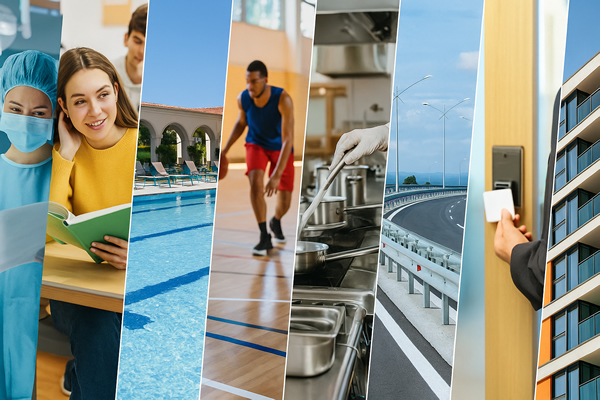
"The choice of faucets depends strictly on the context in which they will be installed," Juergen Schweitzer explains. "For example, in healthcare environments such as hospitals and clinics, hygiene is a top priority, so non-contact taps are the most suitable solution. They eliminate the risk of cross-contamination thanks to infrared technology or elbow-operated levers.
In high-traffic locations such as stadiums or airports, it is essential to opt for vandal-proof and robust solutions with durable materials such as chrome-plated brass or stainless steel to prevent damage and ensure a long service life. Furthermore, in contexts such as kindergartens or nursing homes, it is necessary to prevent the risk of burns through thermostatic regulation systems.
Finally, water savings and maintenance costs are key parameters to ensure long-term economic and environmental sustainability. In high-frequency spaces, a judicious choice of fittings can significantly reduce operating costs."
What are the specific advantages and applications of manual, timed and electronic taps?
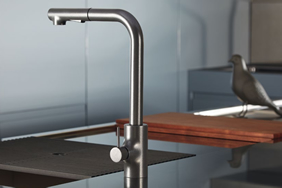
"Each type of faucet has specific advantages depending on the context of use. Manual taps are ideal for private rooms or controlled situations, but their effectiveness depends entirely on user behaviour, making them less suitable for public spaces.
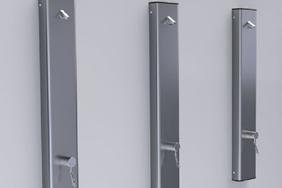
Timed taps are perfect for schools, gyms and sports centres, as they shut off the water flow after a preset time, reducing consumption and optimising operational efficiency. In settings with a limited number of taps installed, they represent an excellent compromise between initial cost and water savings.
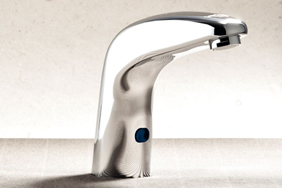
Electronic taps are essential in environments with high hygiene standards, such as hospitals and airports, as they reduce contact with surfaces. In large complexes, the water savings achieved with these devices compensate for the higher initial cost, leading to a significant reduction in operating costs in the long run."
How much do certifications play a role in the choice of fittings?
"Certifications play a crucial role because they guarantee safety and regulatory compliance. This is an evolving issue at European level and we will explore it further once the legislation is clearer. For now, we can schematise certifications into four main categories:
- Technical certifications, which guarantee functionality, durability and resistance of the product.
- Drinking water certifications, which are mandatory in many countries to ensure the quality of the water supplied.
- Environmental and sustainability regulations, such as WATERLABEL and WELL, which provide benchmarks for water consumption and indoor comfort.
- Standards such as LEED and BREEAM are rating systems that certify the sustainability of buildings as a whole.
Choosing certified fittings makes it easier toobtain building certifications, increasing the value of the property and reducing operating costs."
What precautions are required for optimal installation?
"Proper installation always follows the manufacturer's instructions to ensure optimal performance. I recommend installing inlet filters to prevent accumulation of impurities, especially in electronic models with sensitive sensors and solenoid valves.
It is essential to regulate water pressure to avoid stress on internal components. Pressure above 5 bar accelerates seal wear and reduces cartridge life, so the use of pressure regulators is highly recommended.
A crucial aspect to consider is the formation of limescale, a common problem in water systems, especially in hard water areas. This can build up on the internal components of the tap, reducing its efficiency and compromising its proper functioning. To prevent this problem, installing water treatment systems helps limit deposits and significantly reduces the need for maintenance.
In addition, chlorine in the water, used for disinfection, can accelerate the deterioration of seals and other rubber elements. To counteract this effect, it is advisable to opt for highly resistant materials and plan regular checks to ensure the durability and efficiency of the fittings over time."
How does maintenance change between different types of faucets?
"Maintenance varies depending on the type of tap. Manual and timed models require minimal periodic checks, whileelectronictapsrequire checks on the solenoid valvesand periodic replacement of the batteries. A common mistake is the use of mineral oils on gaskets, which accelerate their deterioration by making them stiff and less elastic. It is always better to use silicone-based products to preserve their durability."
What innovations improve the user experience of faucets in public bathrooms?
"The 'For All' system, which integrates water, soap and drying in one location, improves the user experience by optimising flows in high-traffic public toilets. It also reduces areas of contact with potentially contaminated surfaces, improving hygiene.
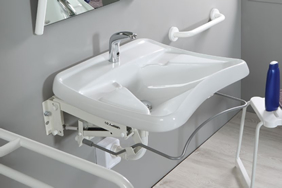
This solution is particularly beneficial for people with reduced mobility and children, who do not have to move between different stations. It also simplifies maintenance and reduces operating costs through the use of antibacterial materials and controlled dispensers."
How does the fitting affect water and energy savings?
"Every litre of water saved means less energy used to heat it, directly reducing operating costs and CO₂ emissions. In large public buildings, low-flow or electronic taps can drastically optimise the use of resources."
What trends and innovations will we see in the coming years?
"The future of faucets is linked to innovative materials and smart technologies. The integration of IoT systems will make it possible to monitor water consumption and optimise maintenance, reducing waste and operating costs. In addition, we will see an increase in the use of innovative materials such as lead-free alloys and stainless steel, which provide greater resistance to corrosion and improve the quality of the water supplied. Aesthetics will also change, with more durable and modern finishes such as Powder Coating in black or white or PVD treatment, which offer greater durability than traditional chrome plating."
One last piece of advice?
"Choosing the ideal faucet requires careful evaluation of functional and operational criteria. Opting for context-appropriate solutions ensures hygiene, efficiency and significant water and energy savings, improving sustainability and reducing long-term costs."