



STRUCTURE OF THE SANITARY WATER SYSTEM
The sanitary water system generally comprises the set of networks, components and equipment that allow the adduction and distribution of hot and cold water to the various users of a building or premises.
WHAT THE PUBLIC BATHROOM IS FOR IDRAL
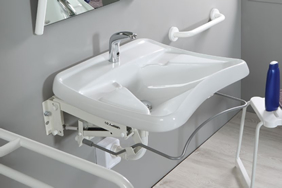
We can define the term ''public bathroom'' as ''a room intended for the transit of a variable number of people and equipped with several toilets accessible to the community, with an area dedicated to people with walking problems''.
It is necessary to refer to the European standard UNI EN 806:2008 and the national standard UNI 9182:2014, which define the criteria and parameters to be considered for the sizing of the system depending on the field of application.
If for a bathroom for residential use (used and maintained with care by a few users) design and comfort of use are preferred, in a bathroom for public and/or intensive use there are other priorities.
DESIGN ELEMENTS
A fundamental element at the basis of every project is water quality, regulated in Italy by DL 31/2001 which defines the minimum quality to be guaranteed to users. It is possible to obtain this information by inquiring with the water service manager or contacting the relevant ASL.
The Anti-legionella Guidelines must also be taken into account, for example by avoiding stagnation points where bacterial proliferation occurs.
At the design level, the designer, installer and maintainer are responsible, from the point of delivery of water in the domestic system to the tap. The design of the public bathroom must necessarily take into account the intended use of the service for which it is intended, and therefore on the basis of the type of users it will have to satisfy, it is necessary to be able to assess
- The affluence of the service;
- The simultaneous use of the users themselves;
- The energy and water consumption required by the utilities.
These are indispensable data needed to identify the right compromise between the cost of system implementation, space management, equipment layout and expenditure of resources.
1) WATER FLOW RATE
It is also necessary to know the total minimum water flow rate that we must guarantee for simultaneous use by the various utilities.
It is therefore fundamental to carry out the correct evaluation of all the equipment that will make up the system, from the correct sizing of the piping based on a flow rate calculation that we need, to the choice of the most suitable boiler for our needs which must be sized to meet the minimum flow rate and contemporaneity conditions based on the nature of use of the public premises; to the water filtering elements useful to guarantee the health of the system itself and the devices for use, and finally the choice of dispensing devices and sanitary appliances with reduced water consumption.
2) RECIRCULATION SYSTEM
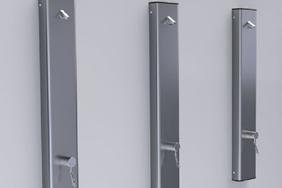
It is good practice to provide for the installation of a boiler with a hot water recirculation system. This function is very important in systems with installations of consumers in series that require the use of larger quantities of water, such as showers. The presence of a recirculation pump allows the hot water to always remain at the right temperature even at the point of withdrawal. As soon as the tap is opened, it will come out directly at the right temperature.
This provides an advantage in terms of user comfort, resulting in higher energy consumption.
The recirculation of hot water is therefore very important because it avoids wasting water unnecessarily while waiting for it to heat up, and also avoids stagnation in the pipes with all the hygienic advantages.
3) SAVINGS
IDRAL sets water and energy savings as the main features of timed and electronic taps, as well as the quality of the materials, anti-vandalism, comfort and ease of installation, cleaning and maintenance.
The use of water- and energy-saving taps in combination with flow restrictors helps reduce system sizing costs, as simultaneous use will require less water consumption, resulting in lower operating and maintenance costs.
We are the first Italian company to have joined the WaterLabel, the European classification system for measuring the water consumption of tap products.
4) TAPS
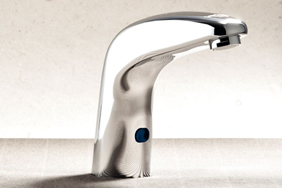
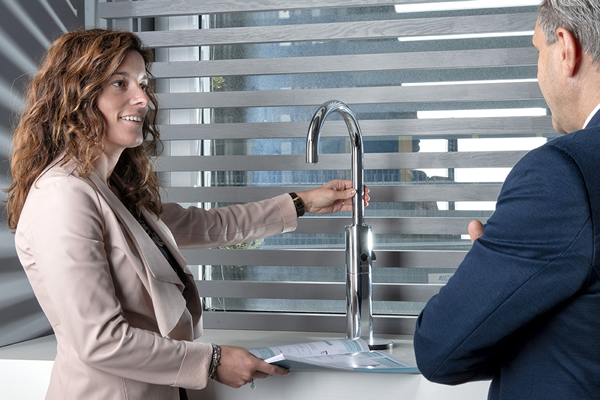
Timed and electronic faucets are ideal for use in public places as the automatic operation type means that you do not have to touch the faucet directly after washing your hands, ensuring optimal hygiene with the advantage of saving water and energy.
For IDRAL, attention to hygiene is a fundamental point that has driven us over the years to develop ever more innovative products:
- PREVENTION OF BACTERIA
The use of special materials in the production of the taps and fittings, using certified brass alloys with reduced lead content, to INOX steel to the use of technopolymers such as ACETALICA for the production of components in direct contact with water. The automatic anti-legionella rinsing for electronic faucets prevents the bacterial proliferation of legionellosis.
- EASY CLEANING
The ergonomic design of the products facilitates cleaning and ensures proper sanitisation.
5) SAFETY AND PRACTICALITY
Community fittings are constantly exposed to vandalism.
Equipping the tap with an anti-vandalism system means equipping it with a series of expedients, in terms of construction, installation and use, that can limit as much as possible its tampering or the disassembly of parts to the point of jeopardising its correct functioning, its improper use such as blocking the supply, or the access of internal parts to unauthorised personnel.
Constructive measures must therefore be taken to prevent inappropriate use and deliberate damage. The robustness and automatic closure ensures that in the event of deliberate tampering, the dispensing is shut off, preventing unnecessary wastage of water.
The installation in a public bathroom of timed and electronic taps implies certain precautions that determine durability and facilitate maintenance:
- In the specific case that you have a particularly high water hardness (15-55 °f), it is indispensable to equip the system with a softener; this system guarantees the extension of the life of the taps.
- It is important to provide several system shut-off points; this allows individual sections of the system to be worked on without having to suspend service to the public premises and facilitates maintenance operations.
- It is necessary to equip the equipment with additional inspectable filters to facilitate cleaning and maintenance operations; these help to safeguard the life of all dispensers and sanitary equipment.
Safety of use: On the other hand, to prevent any temperature changes during dispensing, due to sudden changes in pressure, we recommend providing a thermostatic line valve sized according to the system flow rate.